Our Quality Control Process: Ensuring Perfect Socks Every Time
A behind-the-scenes look at the six-stage quality control pipeline that every pair of custom socks passes through — from incoming yarn inspection to final packaging audit — ensuring defect rates below 0.5 %.
When a brand puts its logo on a product, that product becomes a direct reflection of brand quality. A loose thread, a misaligned pattern, or an inconsistent color can undo months of marketing effort in seconds. That is why our quality control process is not a single checkpoint at the end of the line — it is a continuous pipeline woven into every stage of production.
Stage 1: Incoming Raw Material Verification
Before a single cone of yarn reaches a knitting machine, our QC lab pulls randomized samples from every incoming shipment. Technicians test for tensile strength, colorfastness (using both wet-rub and light-exposure methods), and fiber composition accuracy. If a batch deviates beyond our tolerance thresholds, it is quarantined and returned to the supplier. This upfront rigor prevents downstream defects that would be far more costly to catch later.
Stage 2: Pre-Production Sample Approval
Once materials pass inspection, we knit a small batch of pre-production samples — typically 5 to 10 pairs — that replicate the exact specifications of the full order. These samples are checked against the approved digital proof for Pantone color accuracy, pattern alignment, logo placement, and sizing dimensions. The client receives high-resolution photos (and physical samples on request) for sign-off before mass production begins.
Stage 3: Inline Monitoring During Knitting
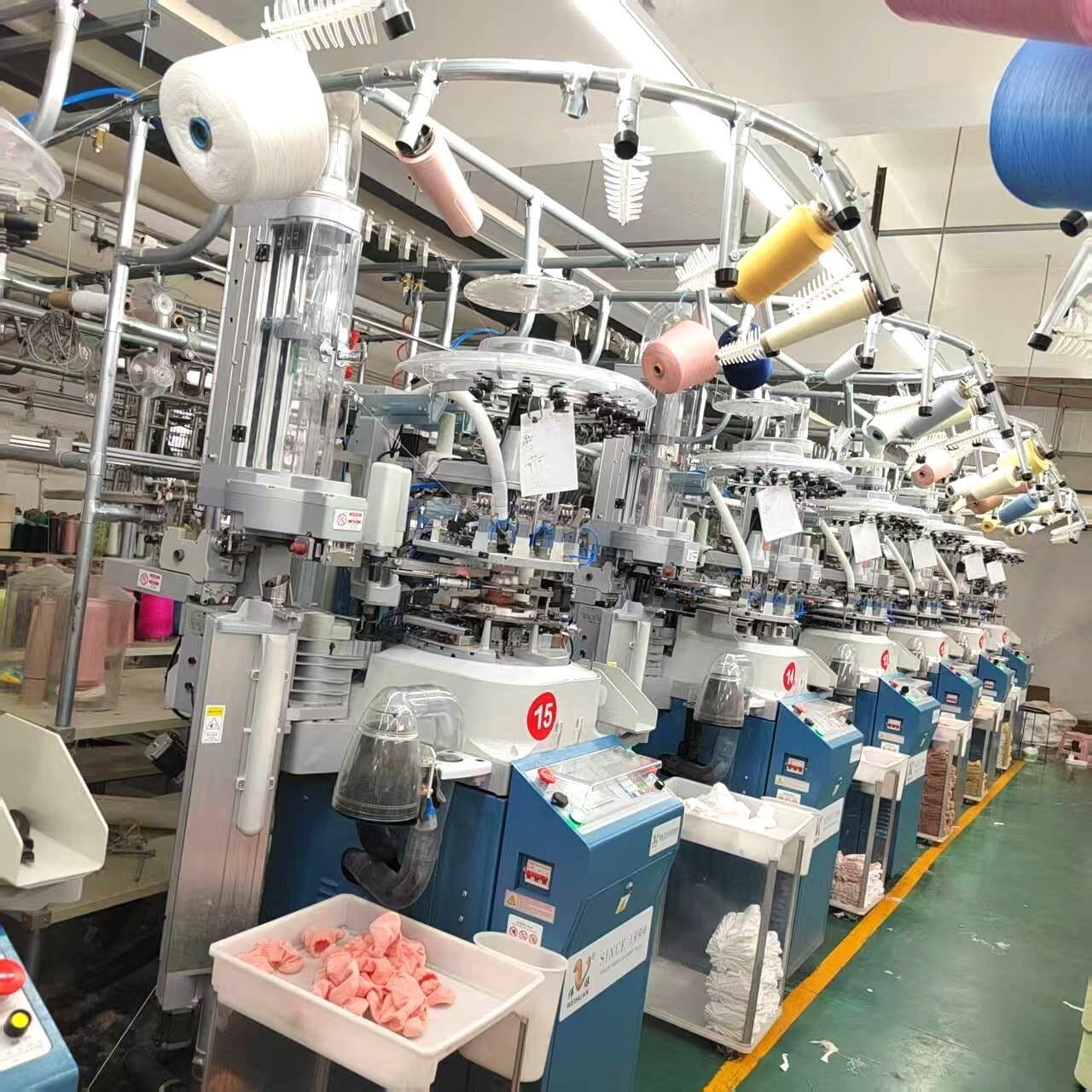
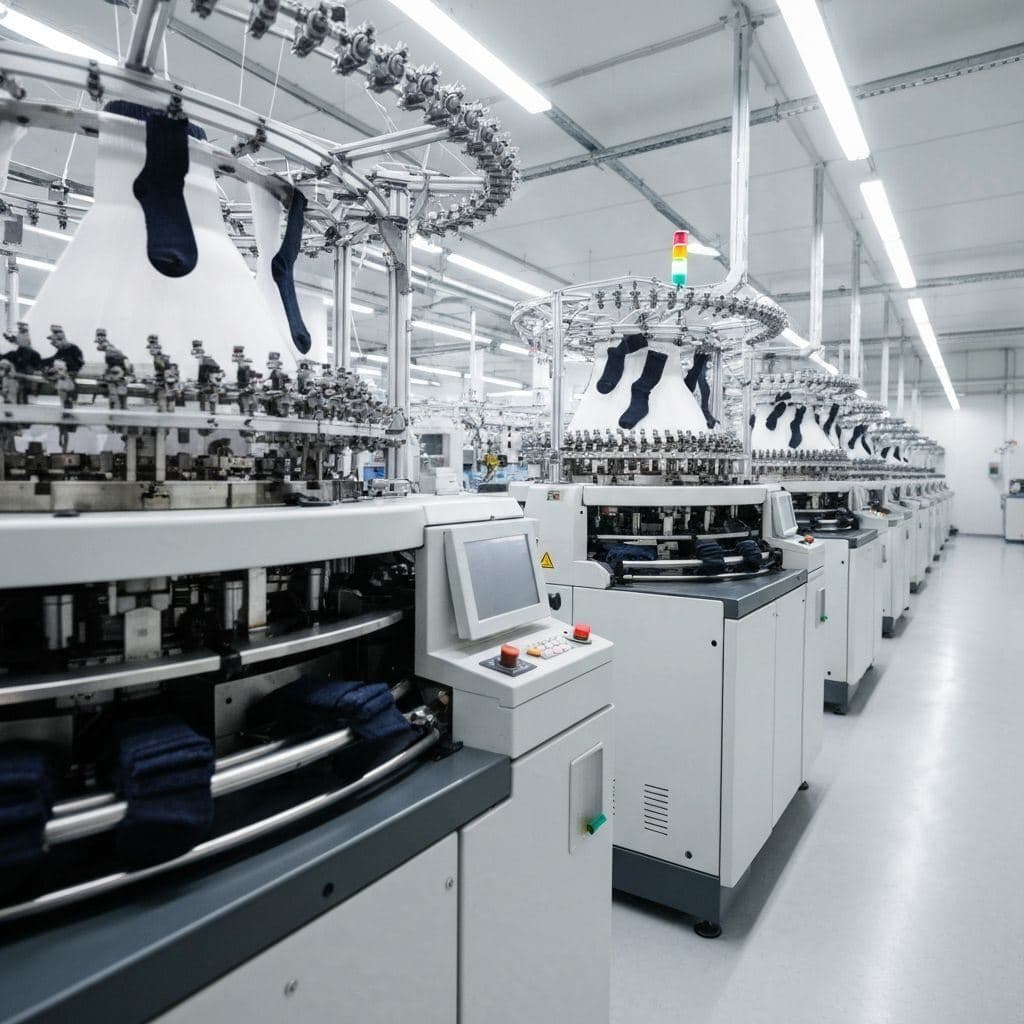
Our factory floor operates over 120 computerized knitting machines, each equipped with yarn-breakage sensors and tension monitors. When a sensor detects an anomaly — a snag, a skipped stitch, or uneven tension — the machine halts automatically. A floor technician inspects the affected sock, diagnoses the cause, and recalibrates the machine before restarting. This real-time feedback loop keeps the defect introduction rate below 1 % at the knitting stage alone.
Stage 4: Post-Knitting Finishing Inspection
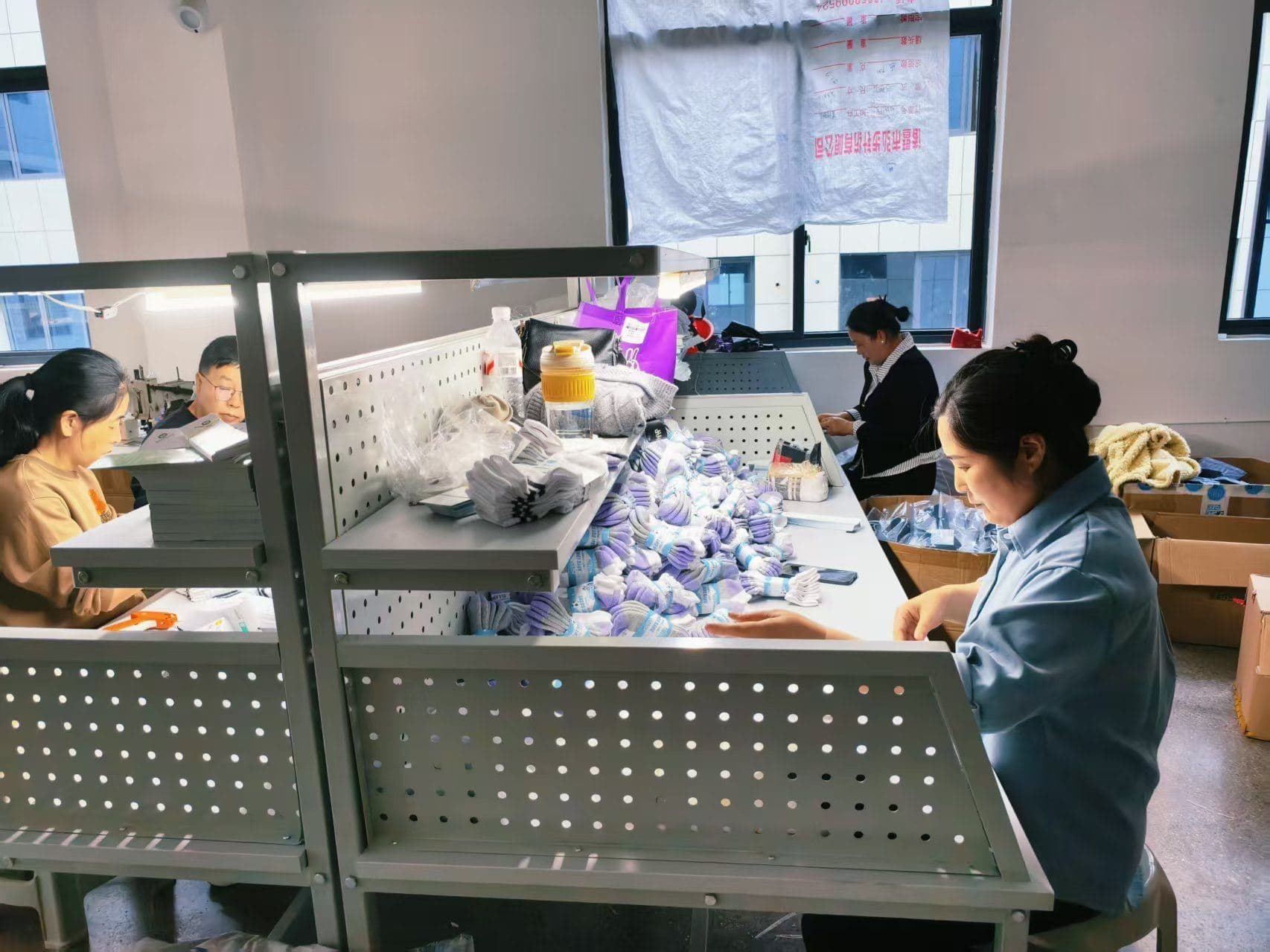
After knitting, every sock goes through toe-linking (seaming the toe closed), steam boarding (heat-shaping to final dimensions), and in some cases, additional treatments like anti-slip silicone printing or moisture-wicking chemical finishing. At this stage, inspectors examine each pair for seam integrity, dimensional consistency, and finish uniformity. Socks that fail are tagged, logged in our defect-tracking database, and removed from the production flow.
Stage 5: Randomized AQL Sampling Before Packaging
Even after inline checks, we perform a final Acceptable Quality Level (AQL) audit using the internationally recognized ISO 2859-1 standard. A statistically significant random sample is pulled from each completed lot and evaluated across 12 criteria — including weight per pair, elasticity recovery, print sharpness, and color consistency under D65 daylight simulation. Our standard acceptance level is AQL 1.5 for critical defects and AQL 2.5 for minor defects, stricter than many industry benchmarks.
Stage 6: Packaging and Shipping Audit
Quality does not stop at the sock itself. Our packaging team verifies that labeling, hang tags, barcodes, and box counts match the packing list exactly. Cartons are weighed against expected totals, and a photographic record of packed units is archived for traceability. For shipments requiring specific retail-ready packaging — belly bands, header cards, or gift boxes — a separate visual audit confirms brand guidelines are met.
Data-Driven Continuous Improvement
Every defect, deviation, and client feedback entry feeds into a centralized quality dashboard reviewed weekly by production managers. Recurring issues trigger root-cause analysis sessions, and corrective actions are documented and tracked to closure. Over the past four quarters, this system has helped us reduce our overall defect rate from 1.2 % to 0.4 %, consistently exceeding client expectations.
By treating quality as a culture rather than a department, we give our clients the confidence that every pair of custom socks arriving at their door is ready to represent their brand at its best.