How to Make Custom Socks
A practical, factory-level guide to making custom socks, from artwork and yarn selection to knitting, finishing, quality control, packaging, and real brand case studies.
Making custom socks looks simple from the outside: send a logo, pick a color, wait for delivery. In real production, a good pair of custom socks is the result of many small technical decisions. The artwork has to work on a curved, stretchy textile. The yarn has to match the use case. The machine program has to translate colors into stitches. The cuff, heel, toe, arch, sole, washing performance, packaging, and delivery plan all have to line up before the first bulk pair is approved.
This guide explains how to make custom socks from a manufacturer point of view. It is written for brand owners, corporate buyers, sports teams, schools, nonprofits, designers, and promotional product teams who want to understand what actually happens after they submit a design.
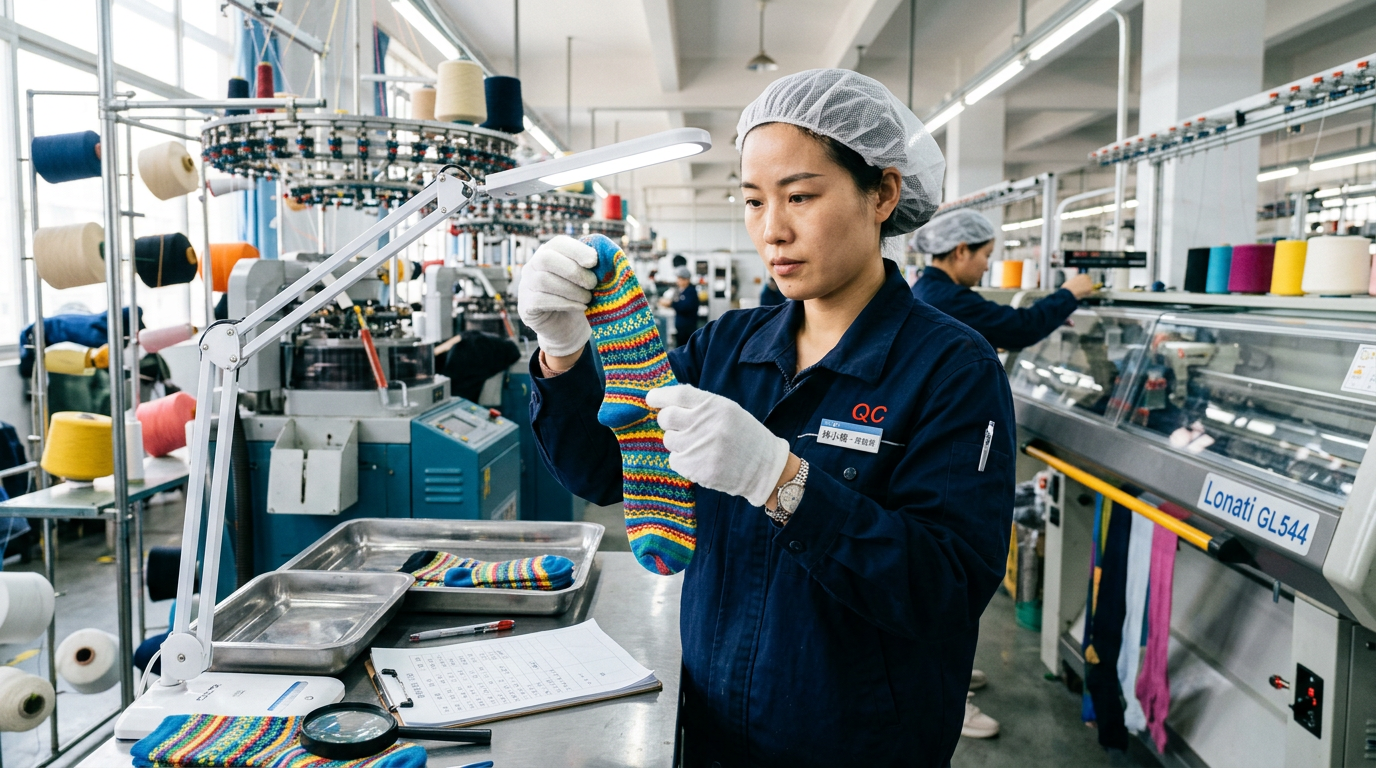
Custom sock production starts with artwork, yarn, machine setup, and sample approval.
1. Start With the Purpose of the Sock
Before choosing colors or materials, define what the sock has to do. A giveaway sock for a trade show has different requirements from a retail athletic sock or a winter ski sock. The purpose decides the construction, fiber blend, thickness, packaging, target cost, and production timeline.
Common custom sock projects include:
Corporate gifts: soft crew socks with tasteful branding, often packed with a belly band or gift box.
Event merchandise: bold colors, fast production, easy sizing, and packaging that can be distributed quickly.
Sports team socks: compression zones, reinforced heel and toe, moisture control, and team color matching.
Retail sock brands: consistent sizing, premium hand feel, durable packaging, and repeatable quality across reorders.
Fundraising socks: low minimum order quantity, strong visual identity, clear margin, and designs supporters want to wear.
Private label programs: custom labels, barcodes, hang tags, carton marks, and documentation for wholesale or marketplace channels.
The mistake many first-time buyers make is asking only, "Can you put this logo on socks?" A better brief is: "These socks are for a 1,000-person tech conference, mostly adult unisex sizing, worn as a premium attendee gift, with our brand colors and a subtle logo." That gives the factory enough context to recommend the right method.
2. Choose the Right Sock Style
Sock style affects both design space and wearer experience. Crew socks are the most common choice for custom socks because they offer a generous leg area for patterns, logos, mascots, stripes, icons, or campaign messages. Ankle socks are lower cost and easier for summer campaigns, but there is less visible branding area. Knee-high socks work well for sports teams, cheer squads, school spirit programs, ski clubs, and bold fashion lines.
Here are practical style choices:
No-show socks: good for casual footwear and fitness studios, but limited branding visibility.
Ankle socks: useful for gyms, running events, lifestyle brands, and warmer climates.
Crew socks: the safest all-purpose choice for corporate gifts, retail socks, sports, and promotional campaigns.
Knee-high socks: best when the design needs to be seen from a distance, such as teams, costumes, or school spirit.
Compression socks: made for wellness, travel, medical-adjacent, or athletic recovery programs; they require more technical sizing and pressure control.
Grip socks: useful for yoga, Pilates, trampoline parks, barre studios, hospitals, and indoor sports.
For a first custom order, crew socks usually give the best balance of cost, comfort, design impact, and sizing flexibility.
3. Build Artwork That Can Be Manufactured
Sock artwork is not the same as a poster or T-shirt print. A sock is a small, elastic tube. When the wearer pulls it over the foot and calf, the artwork stretches. Tiny text, thin lines, small gradients, and photographic details may look good on screen but become unclear after knitting.
A factory-ready sock design should include:
A vector logo file such as AI, EPS, SVG, or high-resolution PDF.
Pantone or brand color references when color accuracy matters.
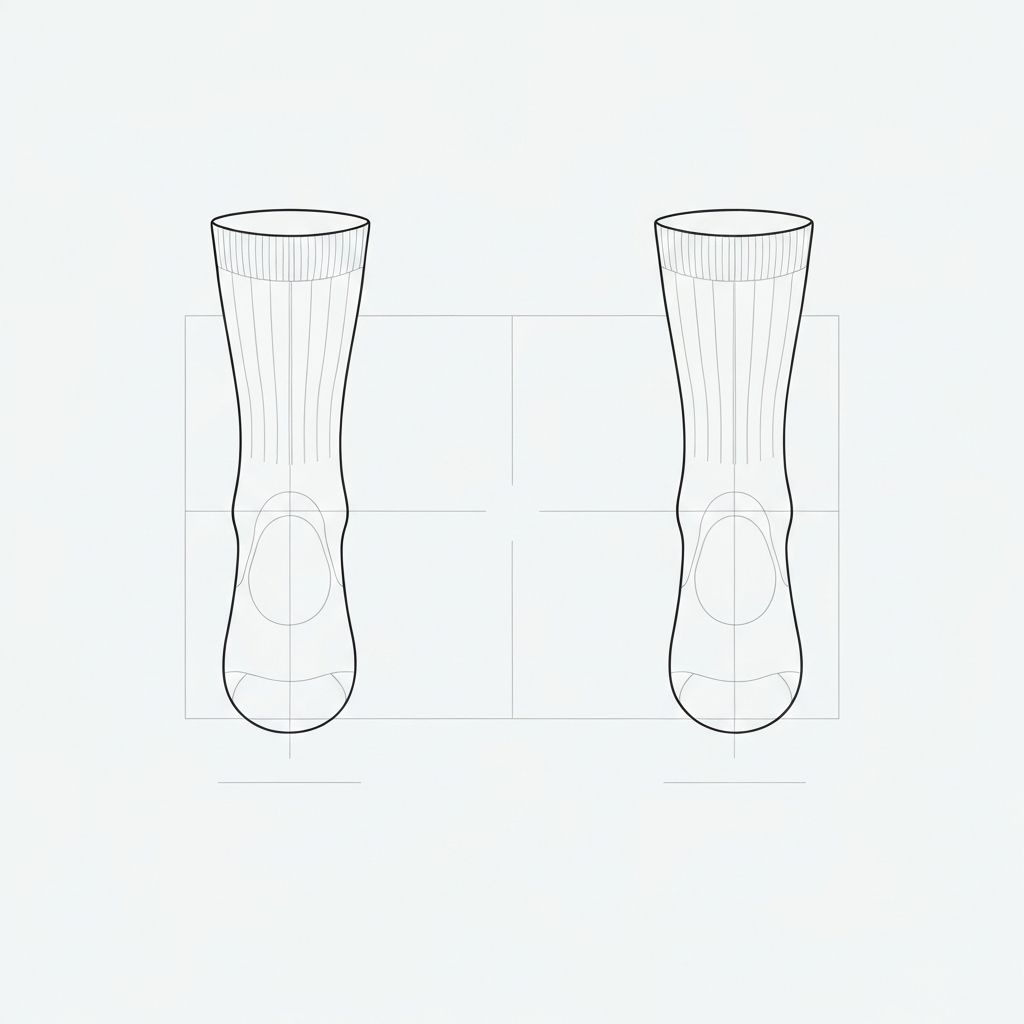
A sock template showing cuff, leg, heel, foot, sole, and toe areas.
Notes about logo size, logo placement, pattern direction, and whether the design should mirror on both socks.
A decision on whether the pair is identical, left-right specific, or mismatched.
Packaging artwork if belly bands, labels, hang tags, or boxes are required.
For knitted custom socks, keep important details at least 2 mm wide where possible. Avoid long lines of tiny text. Place logos on the outside ankle, calf, or top of foot where they will be most visible and least distorted. If the sock uses a repeated pattern, make sure the repeat still looks balanced around the back of the leg.
4. Select the Manufacturing Method
The main production methods for custom socks are jacquard knitting, sublimation printing, direct-to-garment printing, embroidery, and add-on treatments such as silicone grip printing. The right method depends on the artwork, order quantity, material, and final use.
Jacquard Knitting
Jacquard is the most common method for premium custom socks. The design is knitted directly into the sock using colored yarn. The logo and pattern are not printed on top; they are part of the fabric structure. This makes jacquard socks durable, washable, and professional looking.
Jacquard works best for logos, stripes, mascots, geometric patterns, icons, and limited-color artwork. Most sock knitting machines can handle several yarn colors in a design, but too many colors in the same row can make the inside of the sock bulky because of floating yarns. A good design team will simplify gradients and tiny shapes into clean stitch blocks.
Sublimation Printing
Sublimation is best for full-color artwork, photographs, complex gradients, or all-over graphics. The design is printed with heat-reactive dye onto transfer paper, then heat-pressed onto polyester-rich socks. The dye bonds into the fibers, giving bright color and smooth artwork.
The limitation is material. Sublimation needs a high polyester content and works best on white or light base socks. It is not ideal for customers who want a cotton-rich sock or a deeply textured knit feel.
Direct-to-Garment Printing
DTG printing can work for small batches, samples, and novelty designs, especially when the artwork is complex and the buyer does not need the durability of a knit-in design. It prints ink onto the sock surface. The result can be detailed, but wash durability and stretch performance depend heavily on ink quality, curing, and fabric blend.
Embroidery
Embroidery can add a premium raised logo, but it is not suitable for every design. Socks stretch, and embroidery can reduce comfort if placed in a high-pressure area. It is usually better for small logos near the cuff or ankle, not large artwork across the foot.
Grip and Functional Add-Ons
Grip socks use silicone or PVC dots printed on the sole after knitting. This is common for yoga, Pilates, trampoline parks, barre, hospital socks, and indoor sports. The grip pattern must be tested for adhesion, flexibility, and wash resistance.
5. Pick the Yarn and Material Blend
The yarn blend determines softness, breathability, durability, elasticity, and cost. There is no single best material for every custom sock. The right blend depends on the wearer and use case.
Common material choices include:
Cotton blend: comfortable, breathable, and familiar. A popular everyday choice for corporate gifts, casual socks, and retail lifestyle socks.
Combed cotton: smoother and softer than basic cotton because shorter fibers are removed before spinning.
Polyester blend: better for sublimation printing, performance socks, quick drying, and bright graphics.
Nylon: usually used for strength, abrasion resistance, and heel-toe reinforcement.
Spandex or elastane: adds stretch and helps the sock hold its shape after repeated wearing.
Merino wool blend: warm, breathable, and premium. Good for outdoor, hiking, winter, and ski socks.
Bamboo viscose blend: soft hand feel and a strong sustainability story when sourced responsibly.
Recycled polyester or recycled nylon: useful for brands that want a lower-impact material narrative and can verify the material claim.
A typical casual custom crew sock might use cotton, polyester, nylon, and spandex. A sports sock may use polyester, nylon, and spandex with mesh ventilation. A winter sock may use merino wool, acrylic, nylon, and elastane. The factory should recommend a blend based on the product goal rather than forcing every customer into the same recipe.
6. Convert the Design Into a Knitting Program
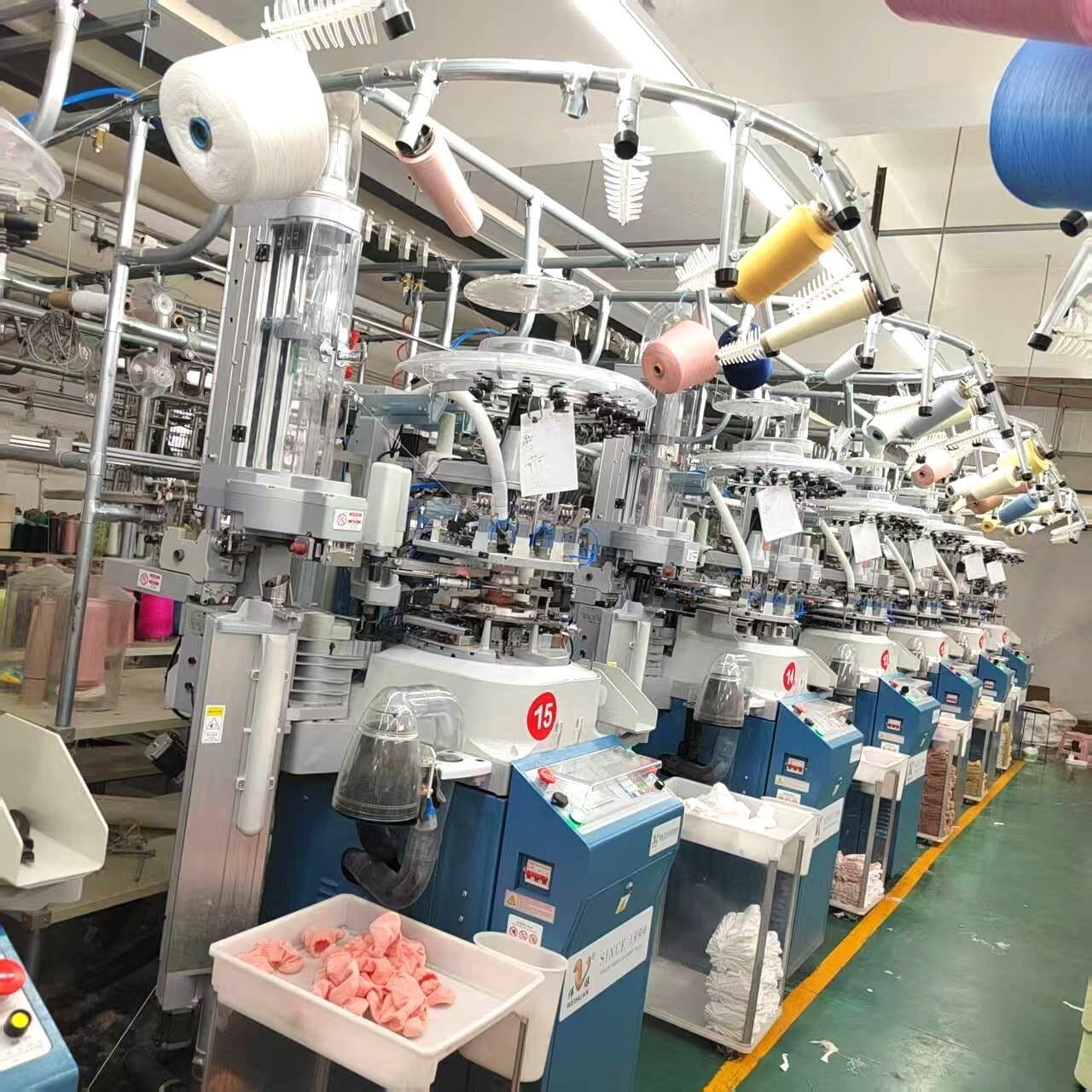
For jacquard socks, the artwork is translated into a machine-readable pattern. Each colored area becomes a stitch instruction. The technician decides how the pattern wraps around the sock, how many stitches are used per course, which yarn feeds are active, and where the heel, toe, cuff, and sole begin.
This stage is where many design compromises happen. A thin diagonal line may need to be thickened. A small letter may need to be enlarged. A gradient may need to become stepped color blocks. A logo with six colors may need to become four colors to reduce bulk and cost. Good factories show these limitations early so the client can approve changes before sampling.
Technical details that matter:
Needle count affects detail, thickness, and sock size.
Yarn tension affects stretch, comfort, and pattern clarity.
Cuff construction affects whether the sock stays up or feels tight.
Heel and toe reinforcement affects long-term durability.
Floating yarn management affects the inside feel of jacquard socks.
Machine speed affects output but must be balanced against defect risk.
7. Make the Pre-Production Sample
Sampling is the bridge between idea and bulk production. A physical sample shows how the design looks when knitted, stretched, boarded, and worn. The first sample is also where the buyer confirms size, color, yarn feel, cuff tension, heel placement, logo clarity, and packaging direction.
A proper sample review should check:
Does the logo remain readable when the sock is stretched?
Are the brand colors close enough under natural and indoor light?
Does the cuff hold without leaving excessive pressure marks?
Is the toe seam smooth enough for comfort?
Does the pattern align around the back of the leg?
Is the foot length correct after boarding?
Does the yarn feel match the intended price point?
Does the packaging protect the socks and present the brand well?
If changes are needed, revise the sample before mass production. It is cheaper to fix a logo at the sample stage than after thousands of pairs are knitted.
8. Run Bulk Production
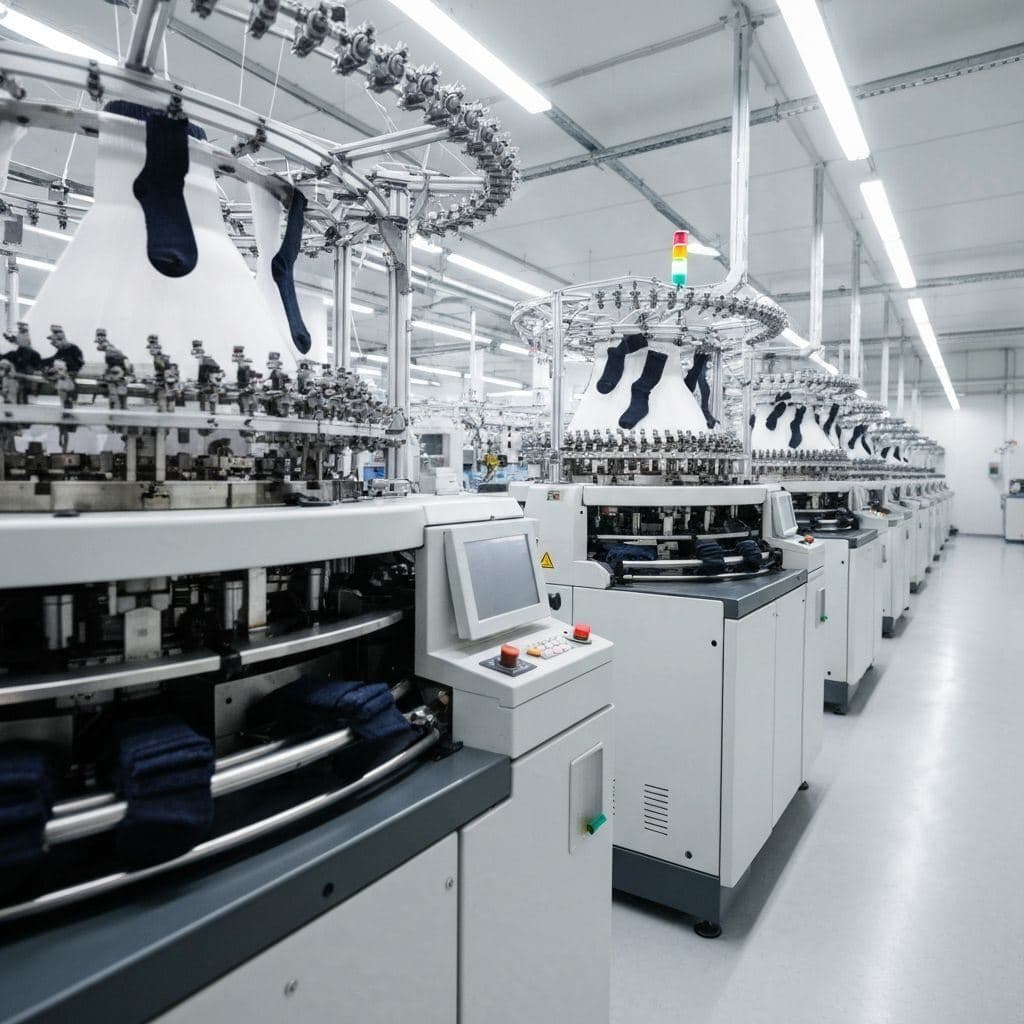
After sample approval, the factory prepares bulk yarn, schedules machines, confirms packaging materials, and starts production. Computerized sock knitting machines form the sock tube, heel pocket, foot, toe, and design pattern in sequence. Production speed depends on machine count, design complexity, yarn type, and order quantity.
A simple crew sock may knit faster than a dense multicolor jacquard design. Compression socks, terry cushioned sports socks, grip socks, and knee-high styles usually take longer because they involve more material, more machine time, or extra post-processing.
The factory should monitor production in real time. Operators watch for yarn breakage, skipped stitches, wrong yarn feeds, needle damage, tension problems, and inconsistent sizing. Inline inspection is important because waiting until the end of the order can allow the same defect to repeat across many pairs.
9. Finish the Socks
Knitting is only one part of the process. After the sock comes off the machine, it still needs finishing.
Typical finishing steps include:
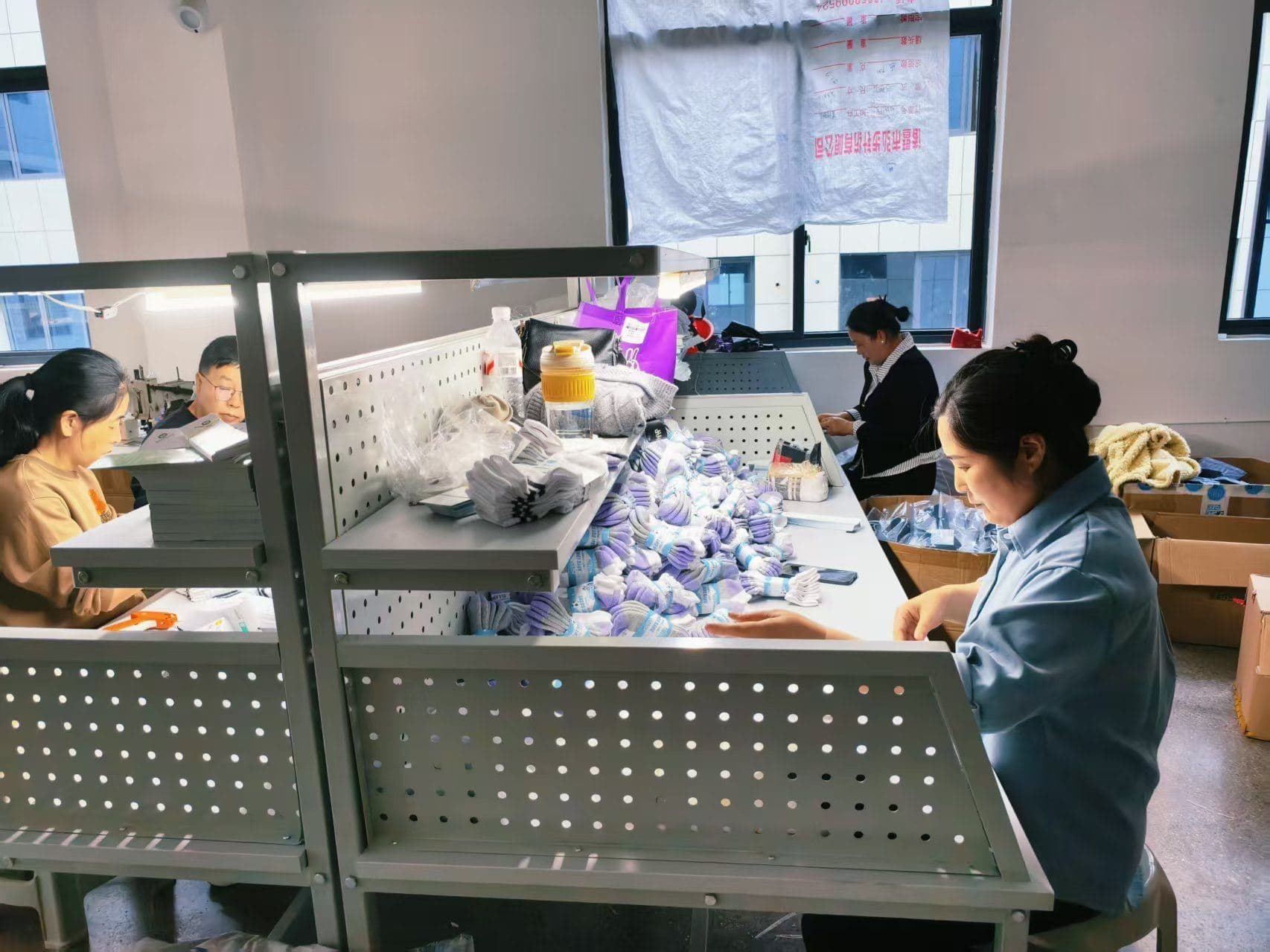
Toe linking or seaming: closes the toe. A smooth linked toe is more comfortable than a bulky seam.
Trimming: removes loose yarn ends and excess threads.
Boarding: places the sock on a metal or wooden form and uses heat or steam to set the final shape.
Pairing: matches left and right socks by size, color, and design.
Functional treatment: applies grip dots, moisture-wicking finish, anti-odor treatment, or softener when specified.
Final pressing: improves presentation for retail or gift packaging.
Boarding is often underestimated. It gives the sock its clean retail shape and helps stabilize dimensions. Without proper boarding, socks can look wrinkled, uneven, or smaller than expected.
10. Inspect Quality Before Packing
Quality control should happen throughout the order, not only at the end. Still, a final inspection is essential before packing and shipping.
A strong QC checklist includes:
Logo position and logo clarity.
Color consistency across pairs.
Sock length, foot length, and cuff width.
Elastic recovery after stretching.
Heel and toe placement.
Loose yarns, holes, skipped stitches, and oil marks.
Seam smoothness and toe comfort.
Pair matching and size accuracy.
Packaging artwork, barcode, label, and carton count.
Wash test or colorfastness test when required.
For bulk orders, many factories use AQL sampling, which means a statistically defined number of pairs are inspected from the lot. For premium retail or strict brand programs, the buyer can request additional testing such as wash shrinkage, abrasion resistance, tensile strength, colorfastness, and material verification.
11. Plan Packaging and Shipping Early
Packaging is part of the product. A pair of socks for a conference giveaway can be packed in a simple recycled paper band. A retail sock may need a hang tag, barcode, size label, care instructions, carton mark, and inner polybag. A gift campaign may use a rigid box or custom paper sleeve.
Useful packaging options include:
Paper belly band.
Header card.
Hang tag.
Recyclable polybag.
Kraft paper sleeve.
Gift box.
Retail display carton.
Custom woven label or printed size mark.
Shipping also needs planning. Air freight is faster but more expensive. Sea freight is better for large orders but needs more time. Event orders should include buffer time for sample approval, production, inspection, customs, local delivery, and internal distribution.
How Long Does It Take to Make Custom Socks?
Timelines vary by factory, order quantity, method, and packaging. A normal custom sock project often follows this pattern:
Artwork review and quote: 1 to 3 business days.
Digital mockup: 1 to 3 business days.
Physical sample: 5 to 10 business days after artwork confirmation.
Sample revision if needed: 3 to 7 business days.
Bulk production: 10 to 25 business days depending on quantity and complexity.
Inspection and packaging: 2 to 5 business days.
Shipping: several days by air or several weeks by sea.
If your socks are for an event, start early. The biggest delays usually come from late artwork changes, unclear color references, packaging revisions, or waiting for sample approval.
Cost Factors: Why Prices Vary
Custom sock pricing is affected by more than quantity. The quote usually reflects style, material, color count, knitting complexity, sock height, cushioning, size range, packaging, testing, and shipping.
The main cost drivers are:
Higher sock height uses more yarn and machine time.
More colors can increase yarn handling and slow production.
Terry cushioning uses more yarn and creates a thicker sock.
Compression construction requires tighter technical control.
Grip printing adds a separate production step.
Custom packaging increases unit cost and setup work.
Smaller orders have less production efficiency.
Rush orders may require machine schedule changes or air freight.
When comparing suppliers, ask what is included. A low unit price may exclude packaging, sample cost, freight, duties, or quality testing.
FAQ: How to Make Custom Socks
What file format should I send for custom sock artwork?
Vector files are best. Send AI, EPS, SVG, or PDF if available. If you only have a PNG or JPG, use the highest resolution file and ask the factory to redraw or simplify it for knitting.
Can I make custom socks with a photo?
Yes, but the best method is usually sublimation printing on polyester-rich socks. Photos do not translate well into standard jacquard knitting because stitches cannot reproduce smooth photographic detail.
What is the best method for logo socks?
For most logo socks, jacquard knitting is the best choice because the logo is knitted into the sock and holds up well after washing. Embroidery can work for small cuff logos, but it can feel stiff if used in the wrong place.
How many colors can custom socks have?
It depends on the machine, method, and design. Jacquard socks usually work best with a limited palette. Sublimation can handle full-color artwork. A factory should review the design before promising exact color count.
What is the usual minimum order quantity?
MOQ depends on supplier and style. Some factories offer low MOQs for standard custom crew socks, while specialized compression, wool, grip, or private label orders may require higher quantities.
How do I choose sock size?
For corporate gifts and promotional campaigns, a unisex adult size is common because stretch knit covers a range of shoe sizes. Retail brands, sports teams, and compression socks should use more precise size grading.
Are custom socks washable?
Yes, if the correct method and material are chosen. Jacquard socks are durable because the design is knitted in. Sublimation prints can also be durable on polyester-rich fabric. Buyers should still request wash instructions and test results for retail programs.
Can I add my own label and packaging?
Yes. Most custom sock manufacturers can add belly bands, hang tags, woven labels, size stickers, barcodes, gift boxes, or carton marks. Confirm packaging artwork early because it can affect the timeline.
What should I check before approving bulk production?
Check logo readability, color, size, stretch, cuff tension, toe seam comfort, yarn feel, packaging, and the final written specification. Once bulk production starts, changes become expensive.
Final Checklist
Before placing a custom sock order, confirm these points:
Purpose and target wearer.
Sock style, size, and length.
Manufacturing method.
Material blend and thickness.
Artwork file and Pantone references.
Logo placement and design template.
Sample approval standard.
Bulk production timeline.
Quality control requirements.
Packaging and labeling.
Shipping method and event deadline.
Custom socks are small products, but they reward careful planning. When the design, yarn, construction, quality control, and packaging all work together, the final product feels intentional. That is what separates a forgettable giveaway from a pair of socks people actually keep, wear, photograph, and reorder.